Imola Luggage Tag
Over-engineered permanence for a throwaway object
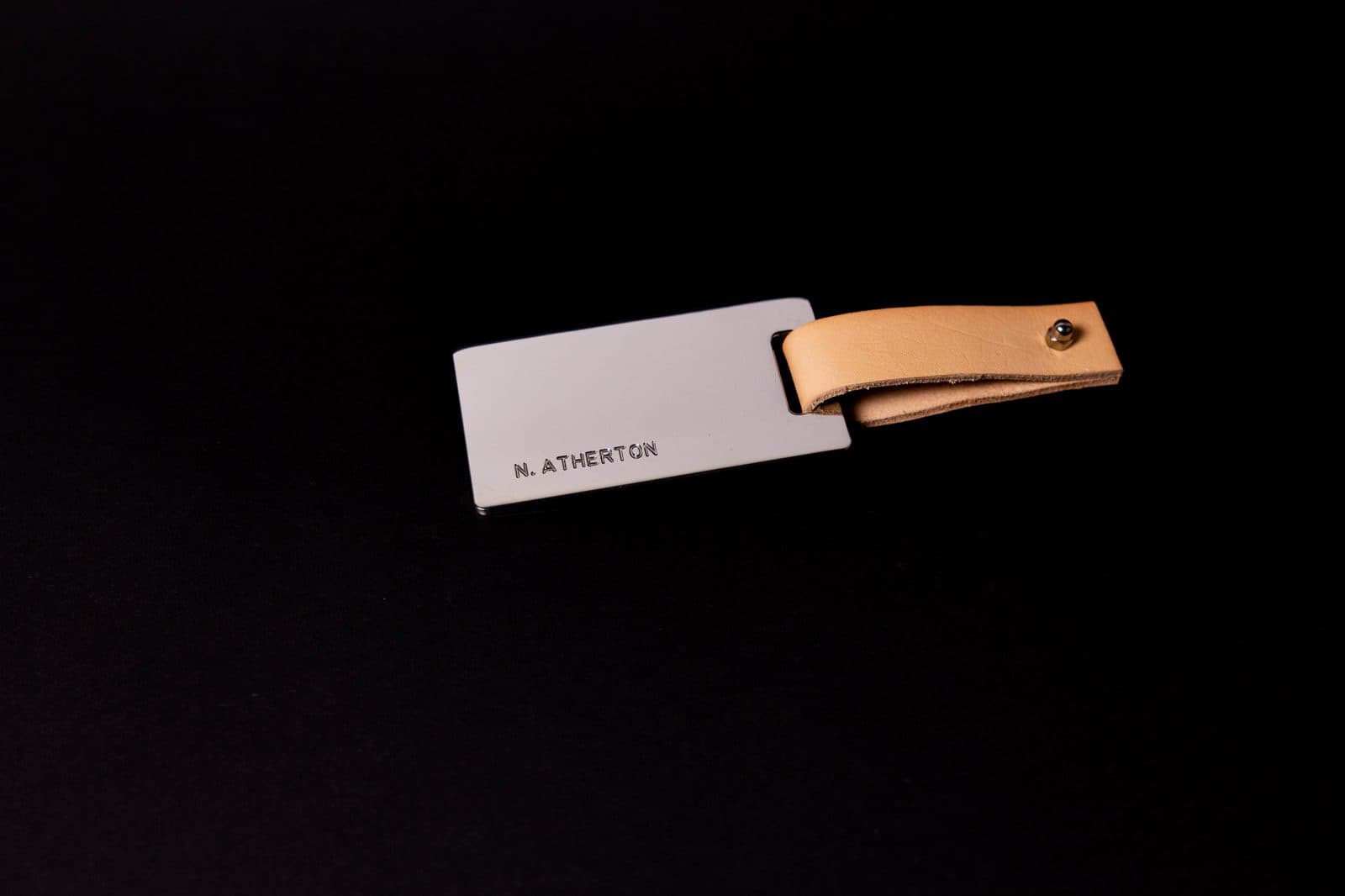
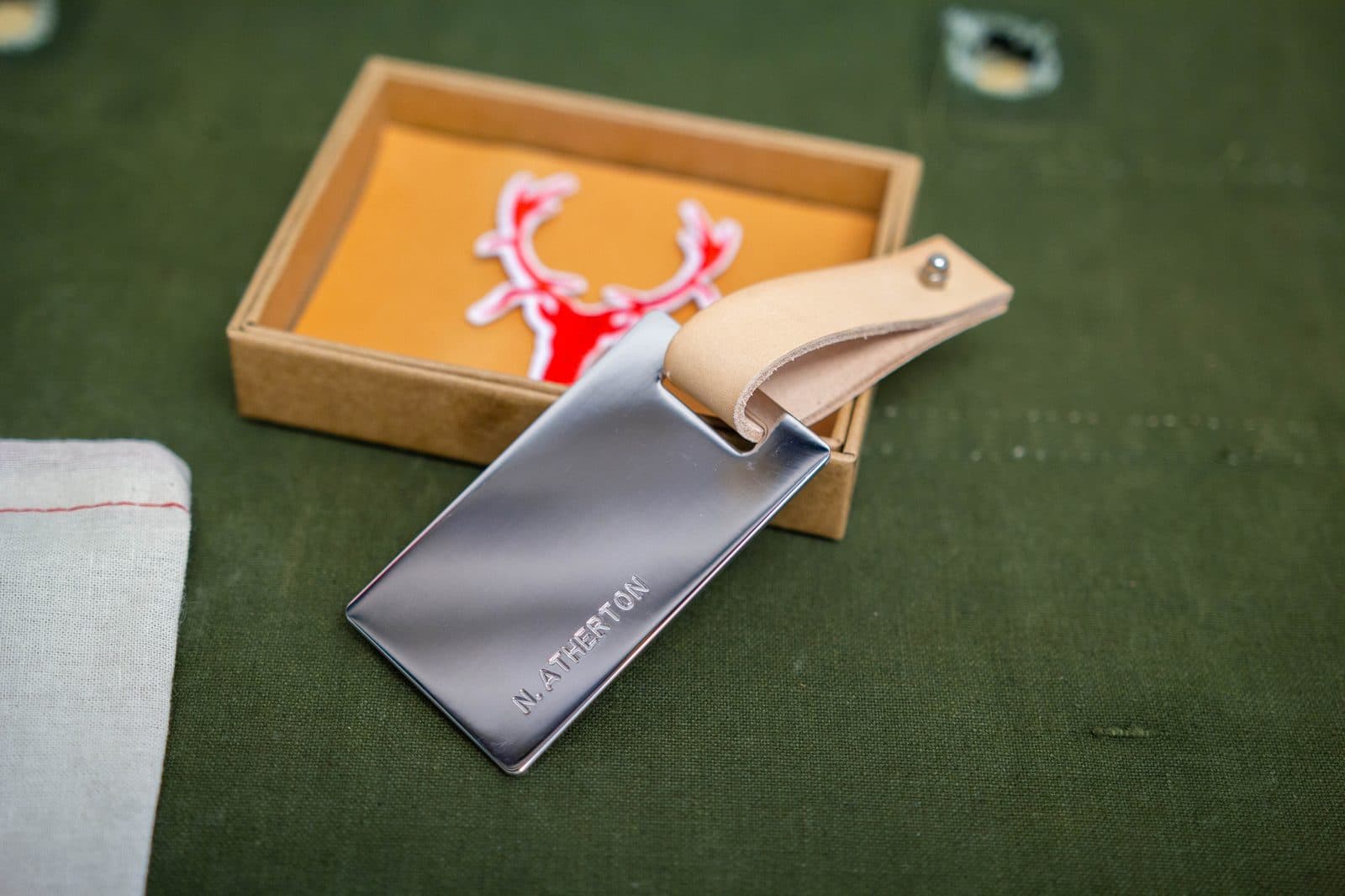
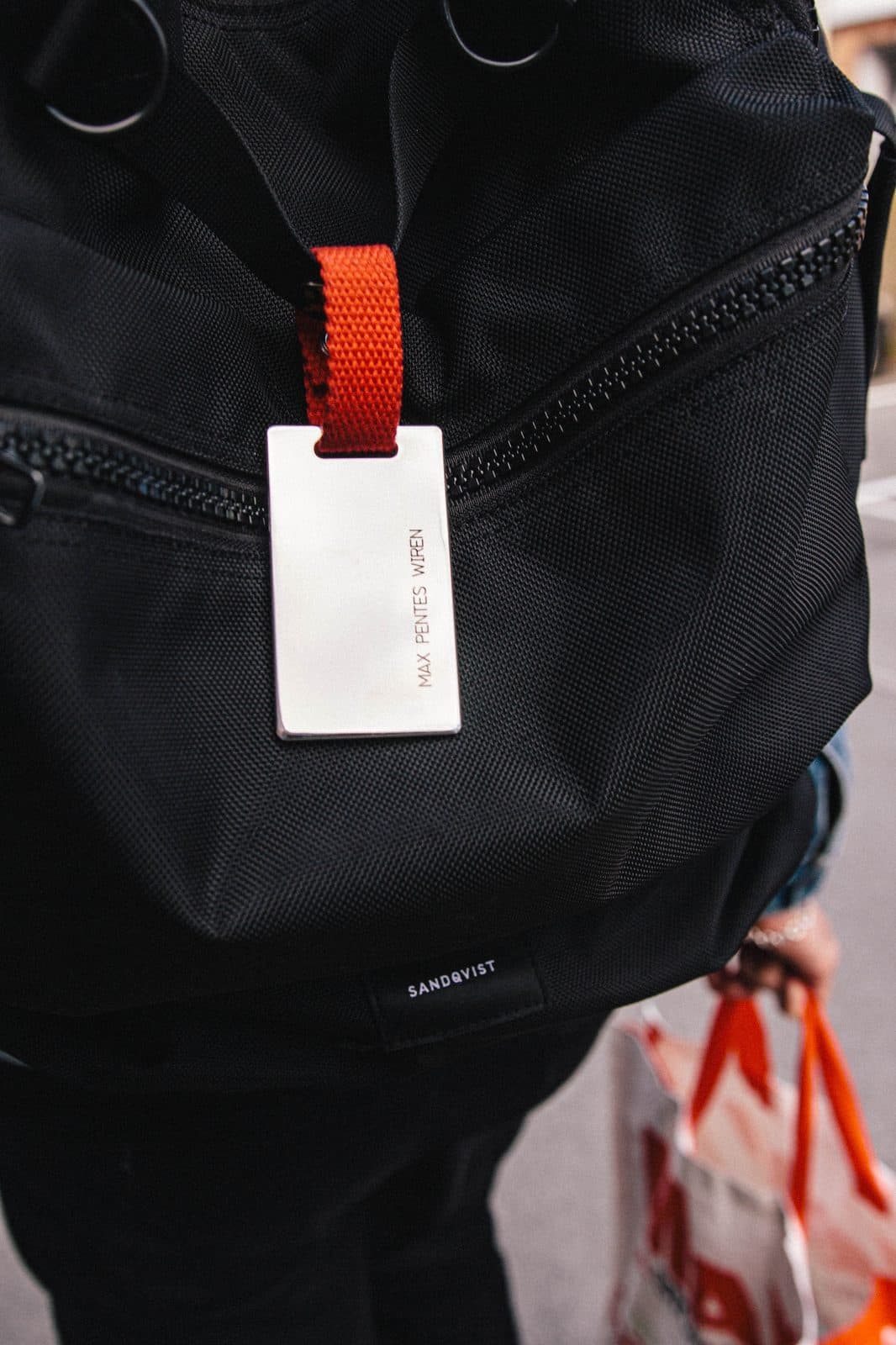
Twelve CNC-milled stainless steel luggage tags — each personalized, paired with Swedish full-grain leather, and presented in a custom oak case — designed as mementos for a private group attending the Imola Grand Prix.
The brief
A private client was organizing a trip for twelve people — flying by private jet to the Emilia Romagna Grand Prix at the Autodromo Enzo e Dino Ferrari in Imola, Italy. They wanted a memento that captured the occasion: something personal, tactile, and built to last far beyond the weekend. The brief was open-ended — make something worth keeping.
My role
I designed and produced the entire project end-to-end: concept, CAD, material sourcing, CNC coordination with a machine shop, leather cutting tool fabrication, leather strap production, packaging design and iteration from 3D print through plywood to final CNC-milled solid oak, and final assembly of all twelve units. The only element I outsourced was the CNC programming — everything else was my hands.
Highlights
- Mirror-polished stainless steel with personalized CNC-milled engraving
- Autodromo di Imola circuit layout machined into the reverse face
- Swedish full-grain leather from Tärnsjö Garveri with custom-fabricated cutting tool
- Stainless steel Chicago screw closure — industrial precision meets everyday carry
- Packaging evolved through three generations: 3D print → plywood → CNC-milled solid oak
- Every element over-engineered — designed to outlast the occasion it commemorates
Early development

Process
Started with the conviction that a luggage tag — typically a disposable, forgettable object — should be something permanent. Every scratch on it would tell a story of travel and adventure.
Designed the tag in solid stainless steel with the Autodromo di Imola circuit layout CNC-milled into the reverse face. The front carries each owner's name, milled into a mirror-polished surface. Deliberately over-engineered.
Sourced full-grain vegetable-tanned leather from Tärnsjö Garveri, one of Sweden's oldest and most respected tanneries. Designed and fabricated a custom cutting tool to produce the leather straps with consistent geometry.
Engineered the strap closure using stainless steel Chicago screws — a mechanical fastener that echoes the industrial precision of the tag itself.
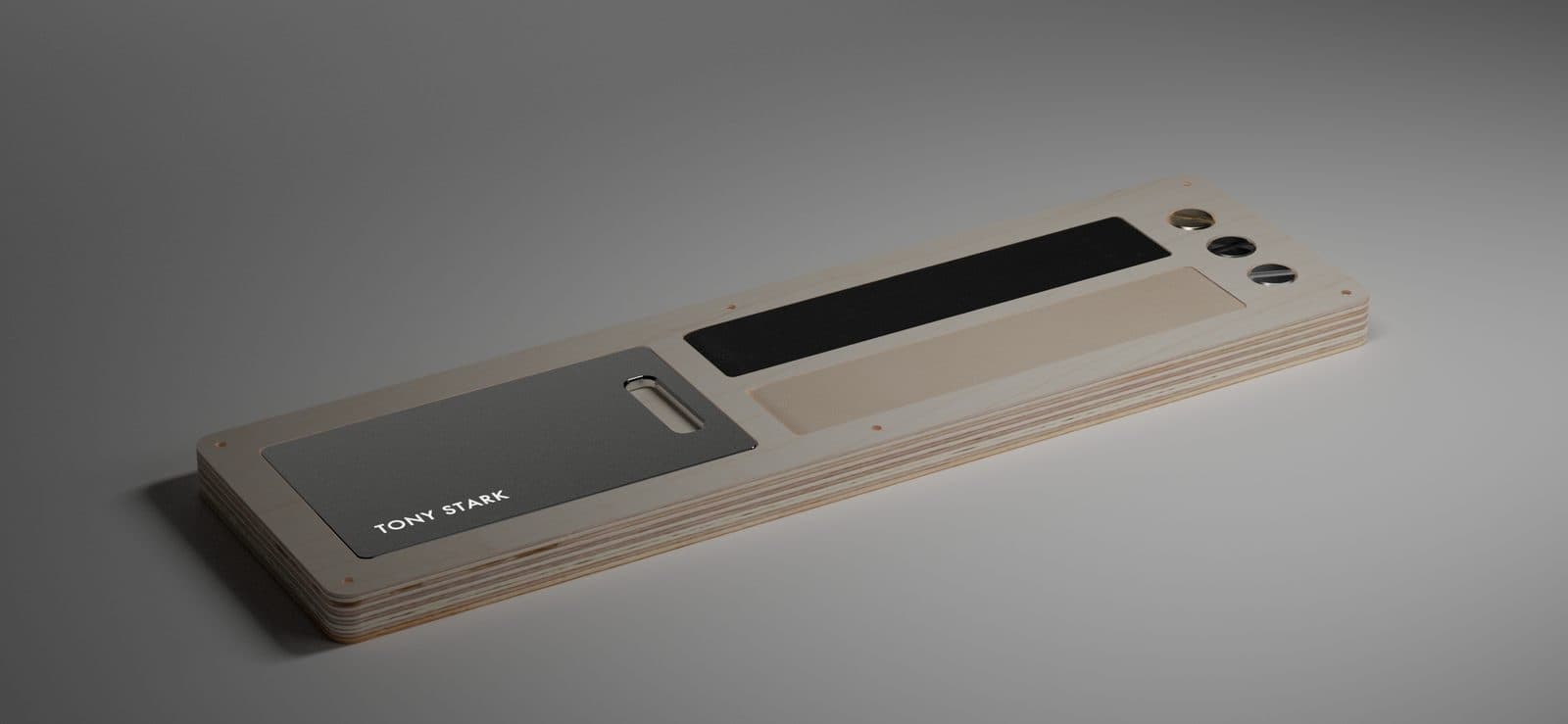
Iterated the packaging through three generations: first 3D-printed for proof of concept, then laser-cut plywood for refinement, and finally CNC-milled from solid oak with felt-lined interior and dedicated cutouts for the tag, strap, and Chicago screws.
Coordinated CNC milling with a machine shop for the stainless steel tags, while handling all leather work, assembly, and packaging fabrication personally.
Final product
Outcome
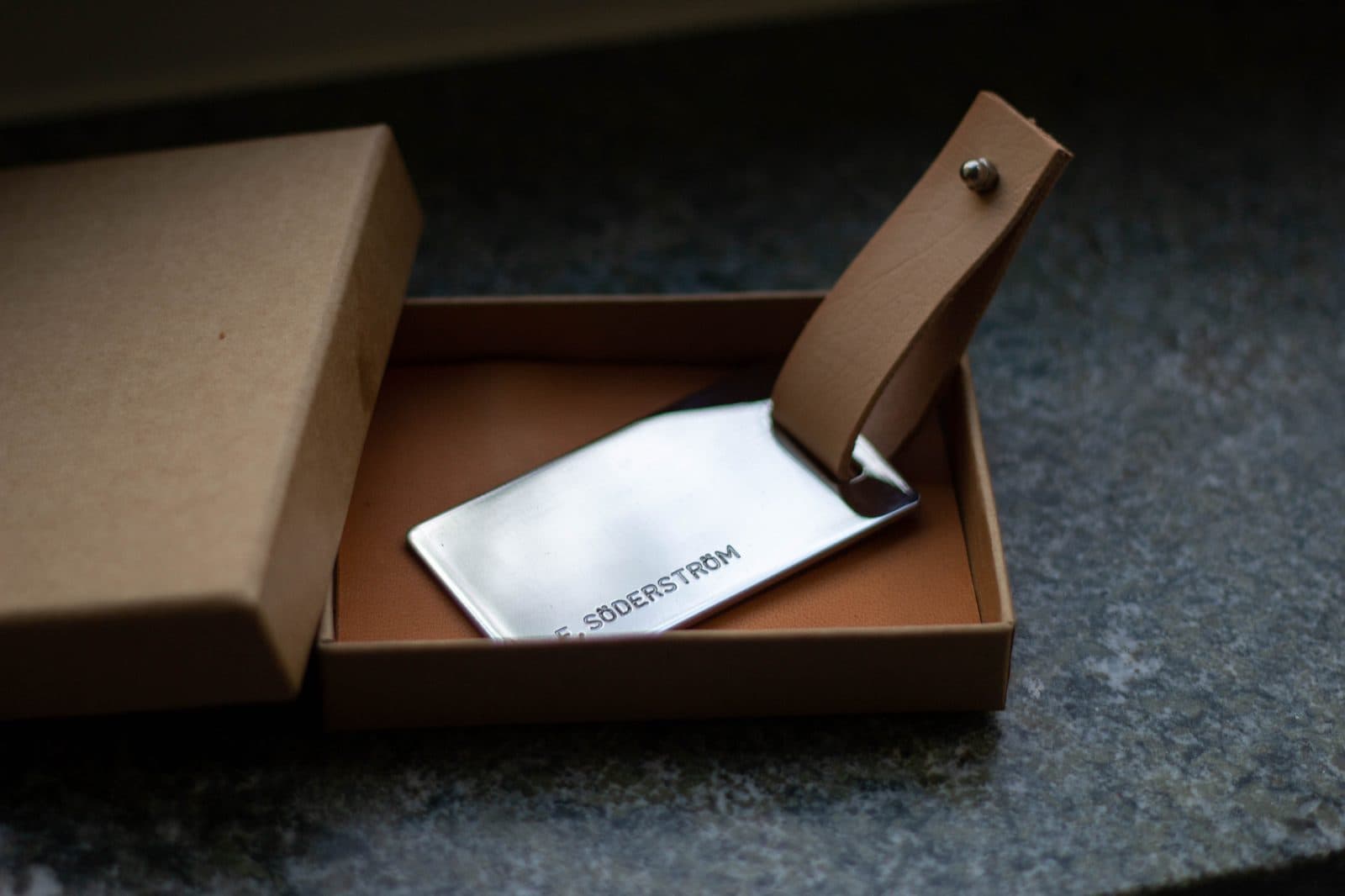
Twelve tags were produced and delivered before the group's departure to Imola. Each one arrived in its oak case — a small, heavy object that communicated the care behind it before it was even opened. The project proved that the most meaningful objects are often the ones nobody asked to be permanent.